

Every few months, there’s a new wave of panic among sellers around the idea that their Amazon listing is hijacked. If you manage a brand on Amazon, the odds are you’ve encountered warnings, horror stories—or even experienced the real thing. But confusion reigns about what a hijacker really is, how they differ from unauthorized resellers, and what brand owners should actually do if their listing is hijacked. Here’s what you need to know, based on first-hand experience, analysis, and facts sourced from Amazon and industry authorities.
What Is an Amazon Hijacker?
An Amazon hijacker is someone who gains access to your product listing through illicit means, essentially hacking into the listing and taking unauthorized control. This is different from an unauthorized reseller, who simply lists your branded product—possibly undercutting your Minimum Advertised Price (MAP), but without hacking your Amazon account or product detail page.
Hijackers use “black hat” tactics:
- Compromising Amazon seller or brand registry accounts
- Exploiting vulnerabilities or phishing for credentials
- Changing ownership, images, or product descriptions
As a result, you may see your listing content changed, or—worst of all—find your listing selling counterfeit/dangerous/illegal items. Amazon itself recognizes listing hijacking as a form of “Abuse or Misuse of the Platform,” a violation of its Seller Code of Conduct and policies around “Product Detail Page Tampering.” Reporting hijackers is not just recommended—it’s required to protect your customers and your brand.
Real World Example
Real hijackings are relatively rare, but you’ll find good examples of them on the Amazon Seller Forums. Here is a great example from 2023:
The legitimate seller is registered for Amazon Custom Program and was the sole manufacturer and seller for several brands, some on Brand Registry. This included, as an example, customized wallets as groomsmen gifts.
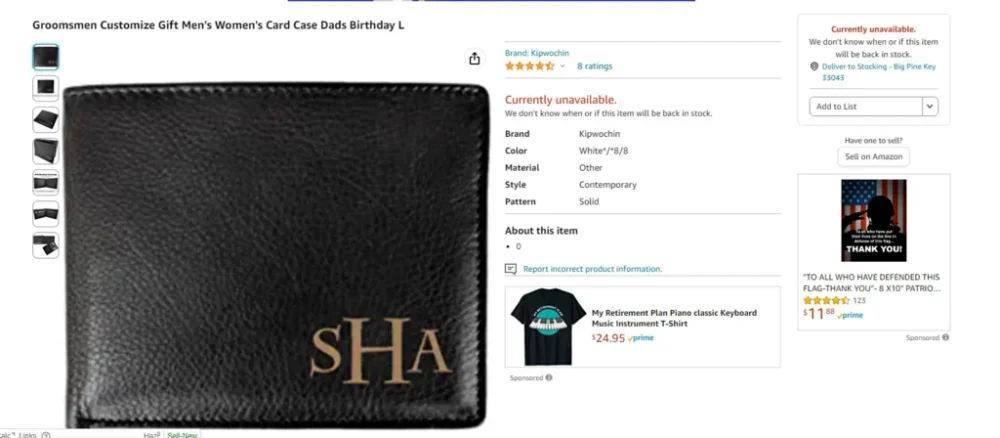
Image source: https://sellercentral.amazon.com/seller-forums/discussions/t/b1d652d2-6330-46d7-a589-eb8f26b559a5
Their listing was changed without authorization, hijacked by a new seller (specifically “Kipwochin”) who used the reviews from the original wallet to inflate the unrelated product’s review profile, a Rangefinder.
As you can see, this has no connection to the original wallet product. And this hijacker went on to take over numerous of the original owner’s ASINs.
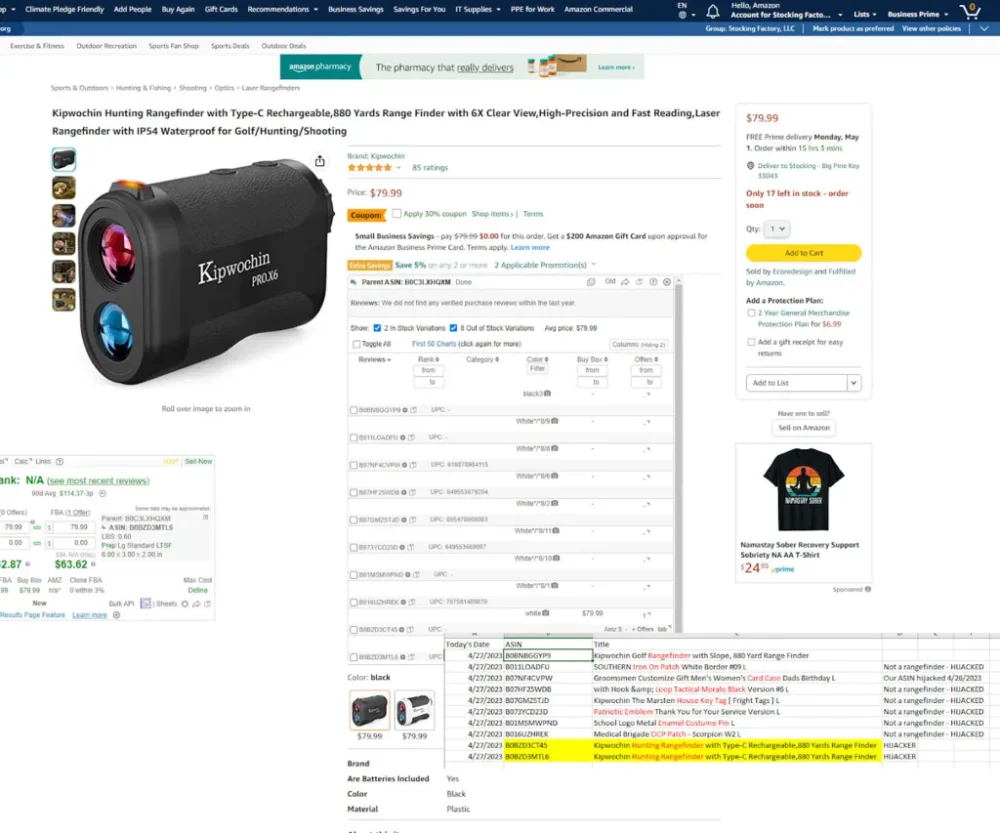
Image source: https://sellercentral.amazon.com/seller-forums/discussions/t/b1d652d2-6330-46d7-a589-eb8f26b559a5
The forum goes through the long twists and turns of the original listing owner attempting to get control of all of their listings, and running into complicated problems like having their ASIN merged with a hidden child ASIN so they lost all connection to the original ASIN. When the original owner sought Amazon’s help and submitted evidence of the hijacking, Amazon sent the evidence to the hijacker, who was listed as the brand owner, to get their confirmation!
The forum includes several other sellers commiserating over similar experiences.
How Do Hijackers Get Access?
People don’t believe me when I say this, but I have seen with my own eyes a menu of hacker services to gain access to Amazon accounts. And sadly, it’s not that expensive! You can purchase services that are anything from changing a listing’s images to suspending a competitor’s Amazon account.
Hijackers typically operate from anywhere in the world—there’s no single origin. Many are based overseas and rely on sophisticated tactics, including:
- Phishing campaigns: Tricking brand owners or employees into revealing login credentials.
- Exploiting weak passwords: Using credential-stuffing or brute-force attacks to log into Seller Central.
- Social engineering: Pretending to be Amazon staff or third-party service providers.
- Data breaches: Gathering login credentials from data breaches.
- Backend Vulnerabilities: Taking advantage of vulnerabilities in the backend architecture of the platforms themselves to hack in.
Most of the time, hijackers take control over listings that are not already registered with a brand under Brand Registry. This is a particular risk to many legacy brands who set up their Amazon accounts before Brand Registry was wildly in use. They may or may not even have registered their trademarks with the USPTO (of course, they might still have common law trademark rights, but that’s something to talk to a lawyer about), but typically haven’t registered them in Brand Registry.
Update: Definitely get your trademarks updated and added to Brand Registry.
As you might imagine, once inside, hijackers can basically do anything they want to your ASIN:
- Swap out listing images and copy.
- Replace your product with a counterfeit or unrelated item.
- Change fulfillment channels to redirect inventory.
Amazon, in its most recent Transparency report, identified listing tampering and hijacking as an “increasing threat,” accounting for a significant percentage of all security complaints on Amazon Seller Central—separate from copyright, MAP, or unauthorized resale claims.
Common Signs That Your Amazon Listing Has Been Hijacked
Brand owners and marketplace managers can typically tell pretty quickly if their listing has been hijacked. Images and copy change, bad reviews come in, the product description changes, inventory stops moving, pricing changes, etc.
If you are paying reasonably diligent attention to your listings and sales, you’ll know if and when you’ve been hijacked.
What to Do If Your Amazon Listing is Hijacked
- Notify Your Legal Counsel Immediately
- Consult your legal team for guidance on what evidence to start gathering.
- Timely legal letters can also help move things through Amazon’s internal channels.
- Gather Evidence
- Take screenshots of the ASIN, including all listing changes, seller information, and any traffic/sales impact.
- Get on the Internet Archive and gather screenshots of your listing before the hijacking so you have a comparison point.
- Gather any documentation you might have to corroborate your historical ownership and sales on that ASIN.
- Report to Amazon using the proper channels:
- The fastest method is through the “Report Abuse” link on the listing page itself.
- In Seller Central and Brand Registry, use the “Report a Violation” tool.
- If needed, open a case with Selling Partner Support, referencing the hijacked ASIN and evidence. Amazon investigates these complaints as high priority.
- Change All Passwords and Revoke Suspicious User Access
- Update your Seller Central, Brand Registry, and related email passwords.
- Revoke API access or linked apps that you don’t recognize.
- Monitor and Stay Diligent
- You likely will have a lot of follow up to do with Amazon, and you should respond professionally and timely.
- Even after a successful takedown, hijackers commonly return. Set up listing monitoring to catch future changes immediately.
Important: Hijackers vs. Unauthorized Sellers
Unauthorized resellers are disruptive, but they aren’t hacking your listing. They exploit the “First Sale Doctrine” to list your product—often using gray market inventory. While this can erode pricing and brand equity, it doesn’t involve illegal access or manipulation of your listing detail page. Hijackers cross a legal line, operating in violation of Amazon Terms of Service and potentially federal law.
What Not to Do
- Avoid hiring “black hat” consultants promising quick fixes—the only legitimate recourse is through official Amazon channels.
- Don’t threaten legal action in Seller Central messages. Amazon prefers a process-driven approach and may penalize misuse of the messaging system.
Update: In my experience, being polite and gracious when working with Amazon has always been more effective than making threats. Amazon isn’t afraid of anything, but they may become unhelpful if you get rude or angry.
- Don’t panic-post in seller forums—focus on direct reporting.